Why SEEBURGER’s First U.S. Brand Campaign Lands With a Falcon
Share this story
Enterprise technology advertising almost always explains what the software does. SEEBURGER's new brand shows what it feels like instead. Here's the thinking behind the work and why adland is talking about it.
Most B2B software ads are built the same way. A problem gets stated. A product gets introduced. A dashboard appears. Everyone in the spot looks relieved and the logo lands.
It’s a formula that works well enough. It’s also the very reason nobody remembers any of it.
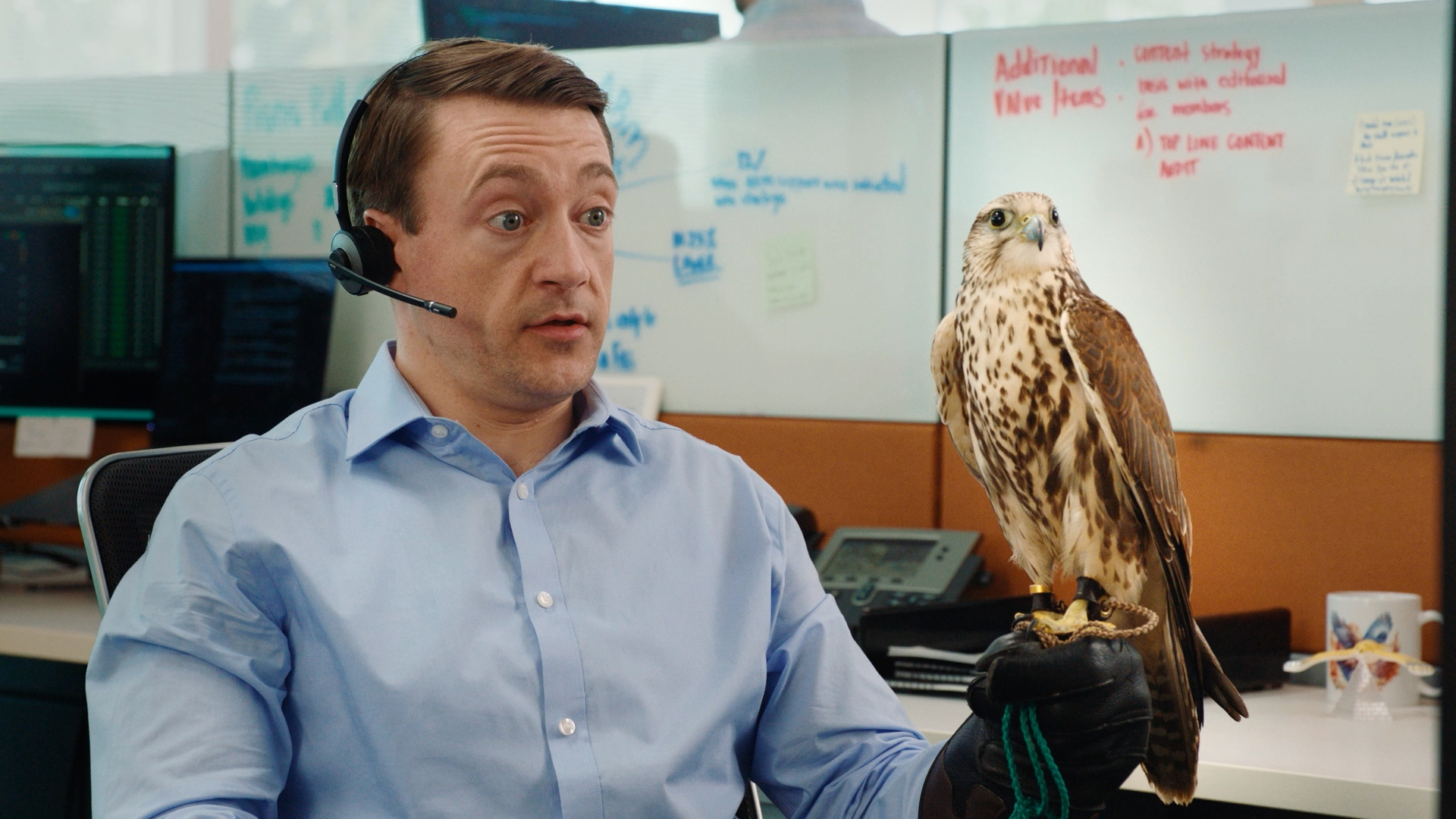
In an effort to create distinction for the brand, SEEBURGER’s first U.S. brand awareness campaign, created with MX, opens in an office where a man is holding a falcon. Not a metaphorical falcon. An actual bird of prey, perched on his forearm, apparently a regular Tuesday visitor. Nobody had noticed until now.
First, Meet SEEBURGER
SEEBURGER is a German enterprise software company whose platform handles the integration work behind modern business.
The new work frames SEEBURGER’s value the way its buyers experience it: you don’t invest in integration for its own sake. You invest so the business runs reliably, adapts faster, and stays connected to customers and partners without friction. When integrations work, teams move faster. When they break, the impact is immediate — manual work, delays, unclear ownership, and avoidable risk.
Which points straight at the marketing problem. Working integration is invisible. Broken integration is all anyone can see.
The Real Challenge Wasn’t the Product
The American integration market is crowded and dominated by much larger competitors. Worse, everyone in it says roughly the same things in roughly the same tone. When every vendor claims to be secure, scalable and enterprise-grade, those claims stop carrying information. Delivering real value wasn’t enough on its own. The brand needed a voice.
Why MX
SEEBURGER brought MX on as its U.S. agency of record in 2025. To start, the work SEEBURGER and MX created together involved social, website and digital media. The idea was to scale the brand’s presence while our MX teams immersed themselves in the integration business.
That sequence matters.
Software is a B2B sale with a buying committee that spans IT, supply chain, finance, and procurement, each carrying a different worry about risk, compliance and what happens when a connection breaks at 2 a.m. You can’t (or shouldn’t) write a joke about integration until you understand what integration actually costs people. We work in B2B exclusively, and we spend the time up front to know a client’s buyers as well as they do.
The strategic foundation, Connect for Good, was already in place. “Love Your Integration” is the brand platform we built on top of it.
The Idea: Sell the Feeling, Not the Feature
Before MX, SEEBURGER’s communications did what nearly all enterprise tech communications do, lead with technical capability. Accurate and credible, but hard to remember.
So we made a deliberate shift toward humanizing the brand. Humor was the tool. Comedy creates mental availability, and mental availability is what drives demand later, when the buyer is finally in market. The harder question was what the joke should be about.
Most enterprise technology advertising tries to explain what software does. SEEBURGER sets out to show what it feels like instead. Using humor, the campaign turns an invisible benefit — integrations that simply work — into something people can instantly understand and remember. The comedy isn't about technology; it's about the freedom technology creates.
That became the strategy. When integrations stop interrupting, you start to notice things. The falcon isn’t a gag about software. It’s a measure of attention, a way to show how much of a person’s day those integration headaches were quietly consuming. It’s difficult to visualize the ‘mental space’ that people gain; the new freedom they have to look around the room and notice things. You can however put a falcon in the room and let people do the math.
How It Came Together
We shot the spot in our own offices in Burr Ridge with Chicago-based improv talent. The performances carry it: the reveal works precisely because nobody on screen treats a falcon as unusual.
The brand film runs in :30, :15 and :06 cuts. Print and social executions extend the platform by showing IT professionals physically embracing their laptops and servers: the campaign’s own description of the product is “stable, scalable, and strangely lovable.” All of it sits alongside the digital assets already in market.
What the Trades Said
Ad Age included the work in its roundup of “Top 20 Creative Campaigns to Know,” describing it as an offbeat use of humor to stand out in a crowded U.S. enterprise tech market, and calling out how the print and social ads carry the theme through IT pros embracing their hardware.
MarComm News covered the launch as SEEBURGER’s first U.S. brand-awareness campaign, framing it as work that bucks category convention by selling relief instead of specification. Adland added the film to its ad archive under the “Love Your Integration” platform. And B2B Editor Rueben Webb at The Drum “loves the video from Seeburger.”
What B2B Marketers Can Take From This
You don’t need a falcon. You do need to be willing to do these four things:
Find the invisible benefit. The best thing your product does is often the thing that stops happening. Absence is hard to advertise, which is exactly why almost nobody tries, and why it’s available to you.
Aim the humor at the outcome, not the technology. Jokes about software are inside jokes. Jokes about what your buyer’s day feels like are universal.
Earn the idea before you pitch it. A strong client-agency relationship gave MX and SEEBURGER teams the greenlight to try something different.
Accept that memorable and safe are different goals. A spot that captures your brand’s value is worth owning, and boldness is what people remember. Safe just leaves that ground unmemorable, open for someone else to claim.
There’s a persistent belief that business buyers are immune to craft because they’re spending someone else’s money. The evidence keeps saying otherwise. This spring our MX team won an Effie — on our first submission ever entered — for work with Okta that traded fear-based cybersecurity messaging for a focus on human capability. Different client, different category, same strategy: treating business audiences like people is a competitive advantage, not a risk.
Work like this doesn’t reach the market without a strong client partnership willing to bravely get creative and stand behind it. SEEBURGER’s marketing team chose memorable over safe in a category that doesn’t often reward the attempt. That’s why the campaign lands.