How B2B Buyers Research Decisions Before They Contact You

Share this story
Buyers may already have a shortlist and be using your website to confirm a choice while you’re still treating them as a new prospect.
Key Takeaways
- B2B buying decisions are increasingly shaped before a prospect ever contacts sales. Marketing has to compete for a place on the shortlist.
- SEO and generative engine optimization (GEO) help potential buyers find you in search engines and AI answers. The expertise and brand recognition you’ve built give them a reason to consider you.
- Buyers who reach your website are often much further down the funnel than traditional marketing has assumed. Your site needs comparisons, technical details, pricing guidance and customer proof to help them decide.
- Self-service must continue beyond research. Buyers should be able to advance on their own terms, with clean handoffs to sales, e-commerce, partners or distributors.
We’ve been watching this play out at MX: More of our own inquiries now start with someone who found us through search or an AI tool, before anyone here knew they were looking. We can see those channels working and we keep testing what it takes to show up more often.
By the time your marketing team sees a new lead, the buyer may already be in the final stretch. They can get that far without ever raising a hand, comparing vendors with help from peers and AI tools and reading your technical documentation on their own. Most marketing and sales plans still assume we get in early enough to educate and persuade. That’s not a safe assumption anymore.
The B2B buying journey now starts before you can see it
The first buyer action you can track may be their last round of due diligence. They may already have a favorite in mind and be using your site to confirm (or challenge) that choice.
AI pushes more of that evaluation out of view. A buyer asks a tool to compare vendors and summarize technical information before visiting a single vendor site, and none of it shows up in your analytics. AI is helping us get better at the things we can track. Whether it helps with the things that actually matter, like how buyers feel about a brand and whether they pick you, is still TBD.
Here’s what we do know. Buyers are, on average, 61% of the way through their journey when they first contact a vendor, according to 6sense’s 2025 Buyer Experience Report. And 95% of the time, the winner came from the shortlist the buyer had on Day One. The list is usually set before a traditional funnel would even count the buyer as an opportunity.
So B2B brands now have three jobs: Earn a position on the shortlist, validate that decision when the buyer arrives and make it easy for the buyer to keep moving.
1. Earn the shortlist with search and generative visibility
Buyers still use search engines to find solutions, answer technical questions and size up vendors. Technical SEO, topic authority and a real understanding of search intent are still the foundation.
But buyers are also asking AI. 6sense found that 94% of B2B buyers use LLMs at some point in the buying journey, to name leading vendors or explain how the options differ, for example. So beyond whether a page ranks, you have to ask whether your expertise and products show up accurately when a generative engine answers those questions.
That’s where GEO comes in. Content has to state your expertise plainly, and product and technical details have to be specific. Site architecture and structured data help machines understand what your content is about. Credible outside mentions matter too, because buyers and AI systems are both looking for evidence they can trust.
If an answer engine narrows 20 possible vendors down to five, being on that list is the competitive battle. We saw this firsthand with a cybersecurity client. When we asked ChatGPT the same questions their buyers would ask, the client didn’t show up among the 13 competitors the model listed. Competition for the machines is just as fierce.
Those options still need to pass the buyer’s own test. An experienced industrial buyer might start with a couple of vendors in mind and use research mainly to validate or rule them out. They don’t need a category primer. Visibility gets you considered, and content with real depth keeps you there. Once the buyer arrives, the job shifts from earning consideration to proving you belong.
2. Validate your position with a website built for a late-stage buyer
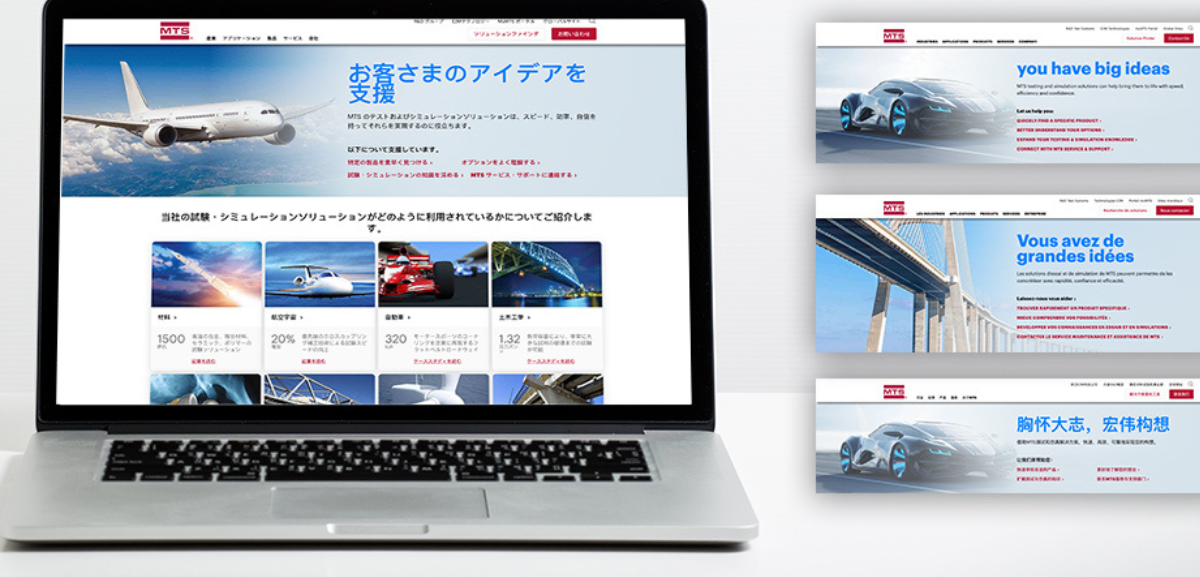
Thought leadership and pillar content do important work early. They answer the first questions and help buyers find you. The problem comes when that’s the only clear path for someone who has already done weeks of research.
That buyer may need specifications, integration details, pricing guidance or proof the solution works in a plant or distribution operation like theirs. They may have questions about security, compliance and total cost of ownership. They shouldn’t have to book a sales call just to get basic answers, and they shouldn’t have to dig for them either. Your website has to work as a research center and a place to buy, sometimes at the same time.
Professional expectations get set by personal technology. People connect a phone to their car through CarPlay or move money in a banking app in seconds, and they bring that expectation to work. B2B complexity doesn’t excuse poor UX. Core Web Vitals still matter so pages load fast, but performance is only part of it.
Information architecture should follow how buyers investigate products, with content that connects as their questions get more specific. Product and solution pages need enough substance to support real evaluation. Configurators, calculators, documentation and case studies should help buyers make progress. Gating all of it behind a form mostly helps you.
The clearer you make it, the more likely they are to choose you. Then the question is what happens when they’re ready to move.
3. Preserve momentum through a self-service sales journey
Sales still matters. What’s changed is when and how buyers want it. Gartner research published in 2026 found that 67% of B2B buyers prefer a rep-free experience.
I read that more as “buyer-controlled” than entirely rep-free. Buyers want to decide when they need help. Some will research, configure, price and buy online. Others will eventually need a salesperson to work through a complex question or a contract. In channel businesses, the next step may be a distributor or partner rather than your own sales team. The experience has to support all those paths without making the buyer start over.
That’s where a lot of B2B journeys still fall short. A buyer spends hours researching, submits an inquiry and then gets a call from someone who knows nothing about what they’ve already learned. Or they configure a product online and then have to explain the same requirements again to a distributor. It’s especially common in industrial and channel businesses, where a digital journey can feel personalized right up until it crosses an organizational boundary, from your site to a salesperson or from you to a distributor.
In McKinsey’s B2B Pulse Survey, 51% of buyers likely to switch suppliers cited a lack of customer tracking across channels as a reason.
Self-service and human service can’t be designed separately. If buyers want to keep researching, let them. If they’re ready to buy online, get out of the way. If they need a salesperson or a distributor, hand over the context so the conversation picks up where the digital experience left off. To the buyer, it should feel like one journey, even if several teams and companies are behind it.
Buyers have the control now
Buyers have more control over the journey, and we can see less of how it starts. That’s the shift I’d plan around. It means SEO, GEO, content and the website can’t be run as separate projects. Together they should lead buyers to a site that helps them decide, then hand them cleanly to sales, commerce or a distributor.
The shortlist gets built whether you’re in the room or not. Earn your place before the first conversation. Then, when buyers are ready to move, don’t make them start over.